
Blogging two days in a row…are y’all impressed yet? 🙂 Here’s blog 2 of 3 to round out our France vacation.
—————————————————–
I forgot to mention in my last post how incredibly windy our first day in Normandy was. The wind was brutal – fierce and bone-chilling – so bad at times, that we did not want to leave the van because it was so difficult to walk in the wind gusts. Looking back, it really set the tone for our first day touring the D-Day sites – the juxtaposition of the pastoral Normandy landscape and lovely beaches with the treacherous wind reminding us that all is not what it seems.
Luckily, that was our only bad weather day of our entire trip. Not too bad, right? We woke up to blue skies and only very light wind on our second day in Normandy. Whew – thank goodness!
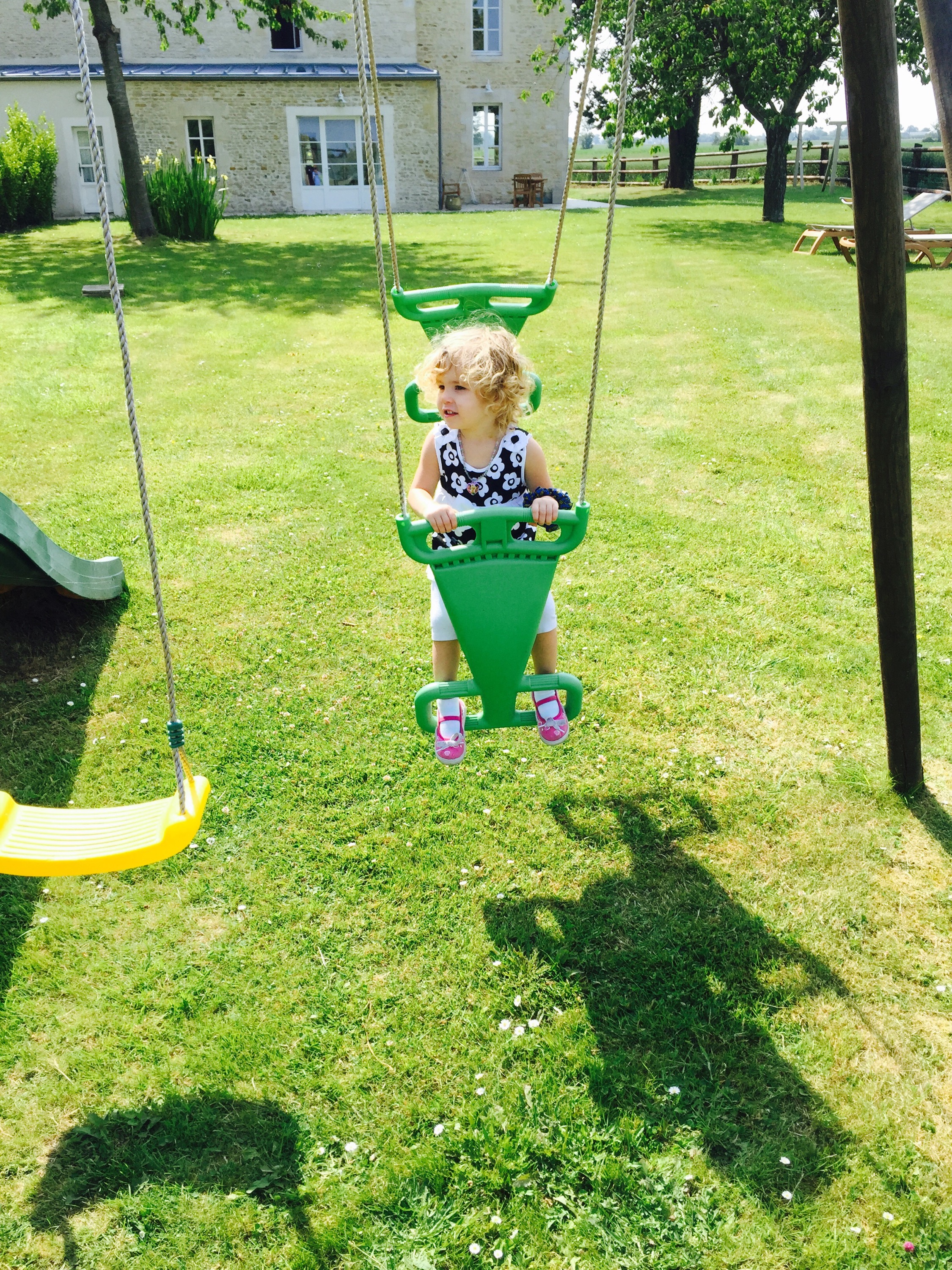
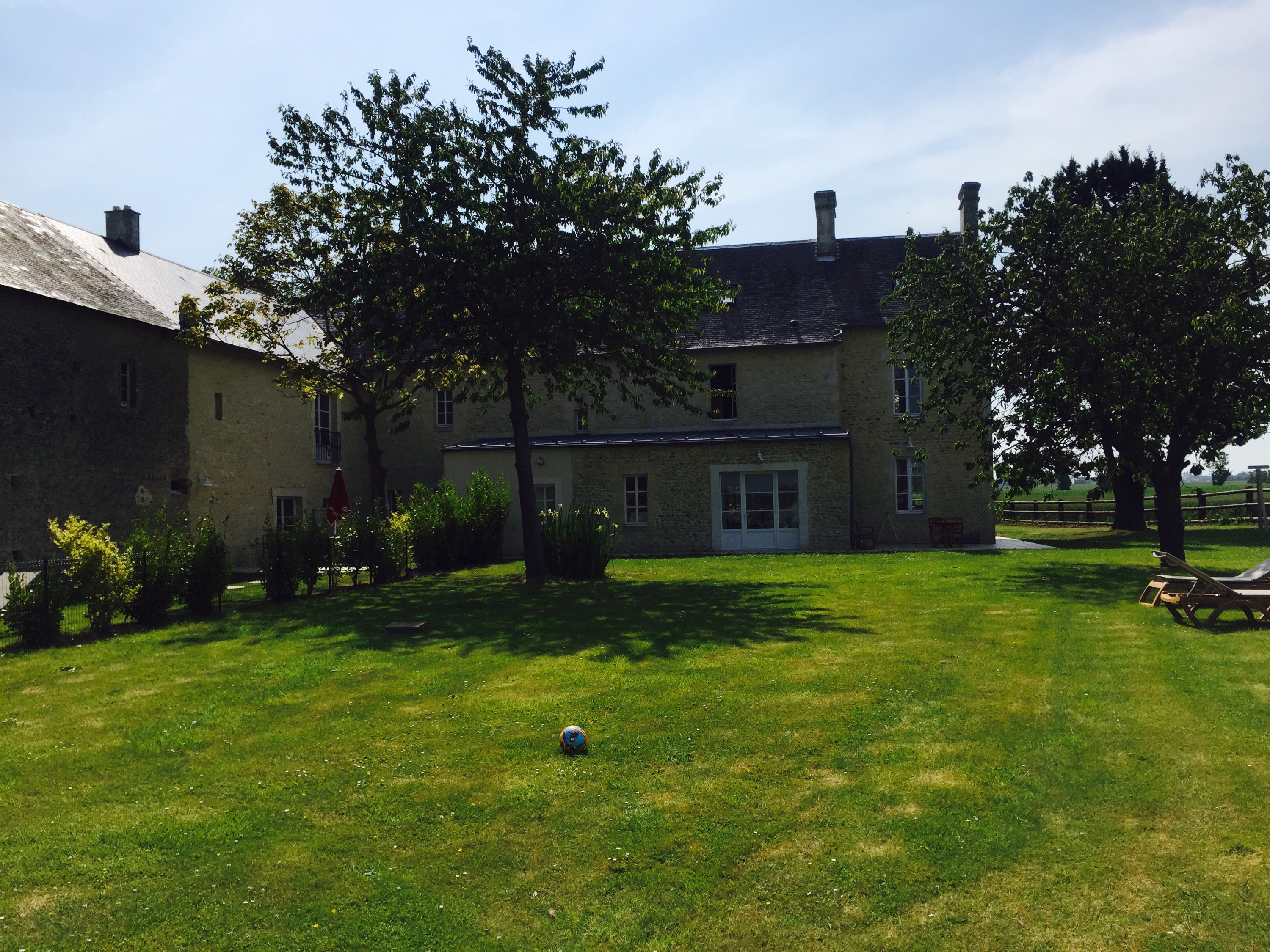
We stayed at a charming farmhouse B&B in the outskirts of Bayeux that my mom found online. The rooms were spacious, the breakfast was yummy, and as added bonus, there was a playset for Lizzie in the backyard. Score!


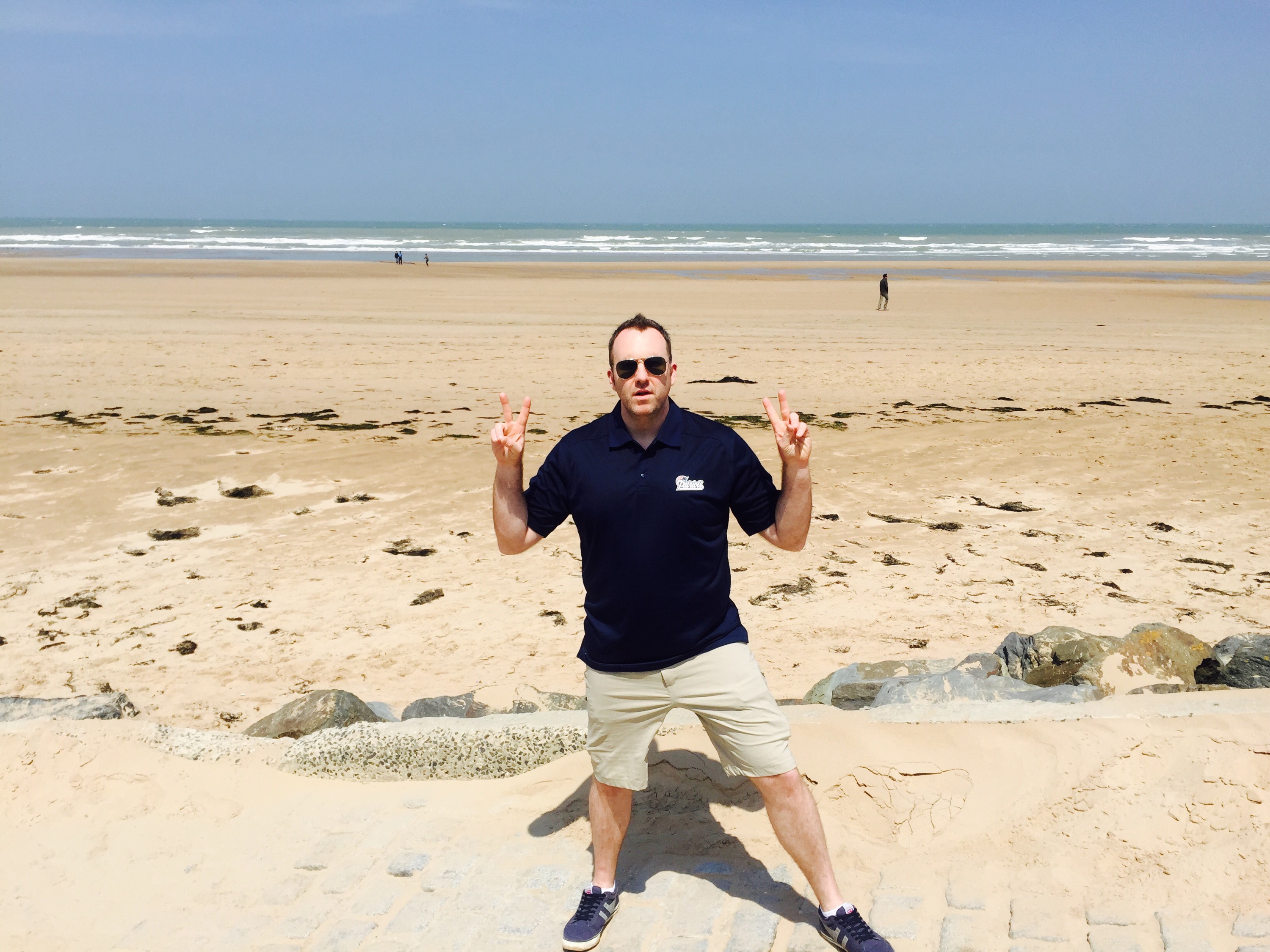
After a relaxing morning, we set off for day two in Normandy. Our first stop was Omaha Beach – the code name for a five-mile stretch of beach in Normandy that linked up the American landings at Utah Beach with the British landing at Gold Beach. Look at the picture below…it looks like any other beach you’ve seen a thousand times, right? Blue seas capped with white froth as the waves roll in and a complementary wide stretch of tan sand for energetic sunbathers to doze on while they catch some rays. How idyllic…except it’s not at all. A gruesome battle took place here – the most deadly of all the beach landings on D-Day.
Looking at Omaha beach today, it’s easy to see why the Americans were sitting ducks for the Germans in their fortified bunkers on the cliffs above. There was literally nowhere to hide. The day before the battle, the Allies had heavily bombed the area but due to poor visibility had missed many targets leaving much of the German defenses intact. Rough seas also impacted the landing, causing seasickness and disorientation before troops even left their boats. Low tide meant that our forces had to slog through deep waters and wet sand – while in full gear weighing close to 100 pounds – to reach the beach, all while dodging heavy artillery. Many men in the first and second assaults were killed just unloading from their landing crafts, and some, loaded down with their gear, drowned in the waters just trying to reach the shore. It was a grisly scene – so different from the tranquil beach you see today.
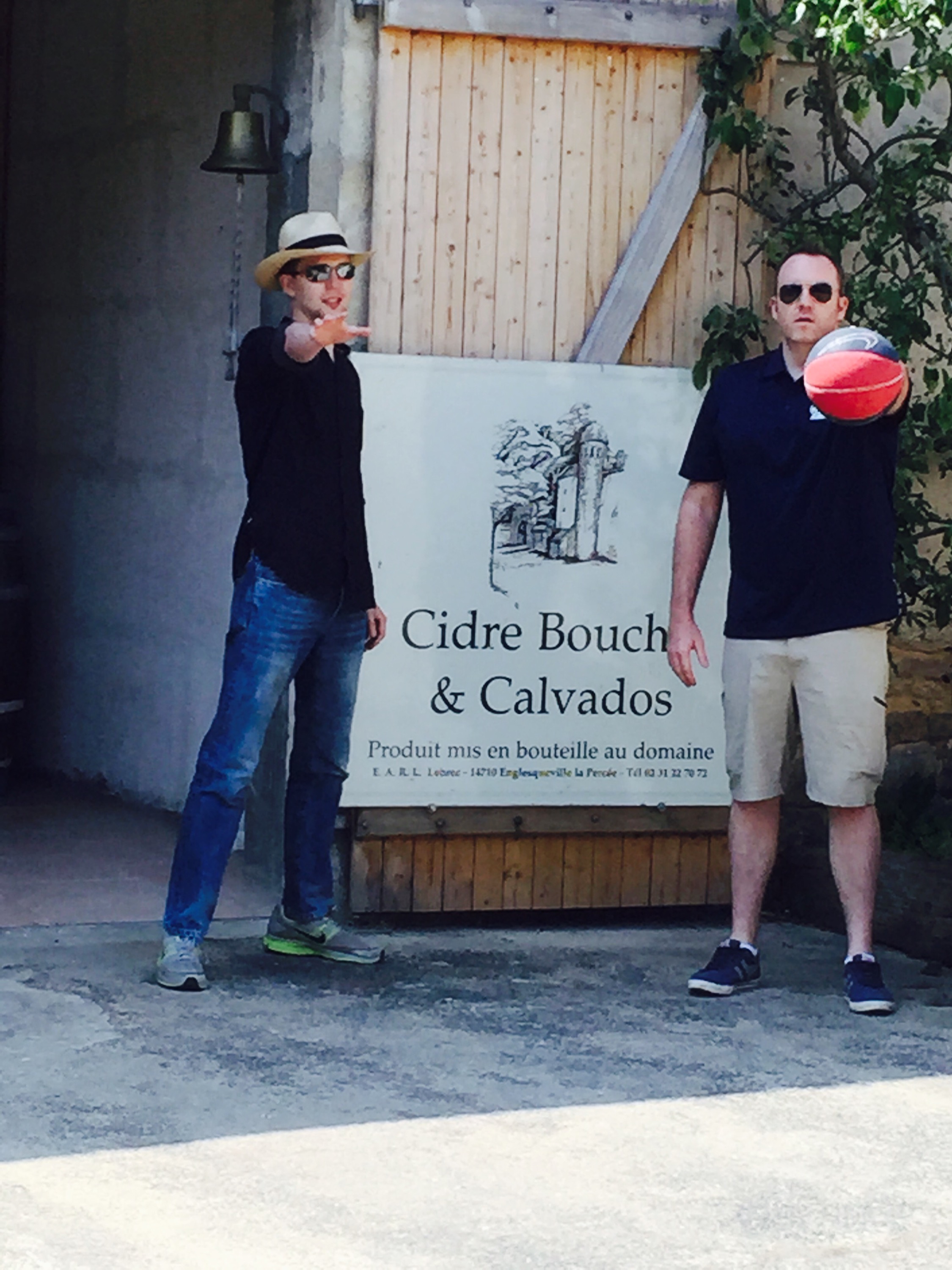
Ok, before we get back to the heavy stuff, I want you to know that the Normandy region is known for more than just the D-Day invasion. There are quaint villages, miles and miles of farm land, and cows (yes, lots of cows). They are also very proud of their cheeses here – Camembert is one you may have heard of. It’s similar to Brie, except a bit more stinky. And while they don’t make wine in Normandy, that doesn’t mean they don’t know how to get their drink on. Instead, they make cider! I’ve always enjoyed a nice cider, so we took an hour out of our D-Day touring to check out a local orchard where cider is made (recommended by Rick Steves, of course). We enjoyed the sparkling cider and pommeau (a mixture of cider and apple brandy), but the calvados (apple brandy) by itself was a bit too strong for us.

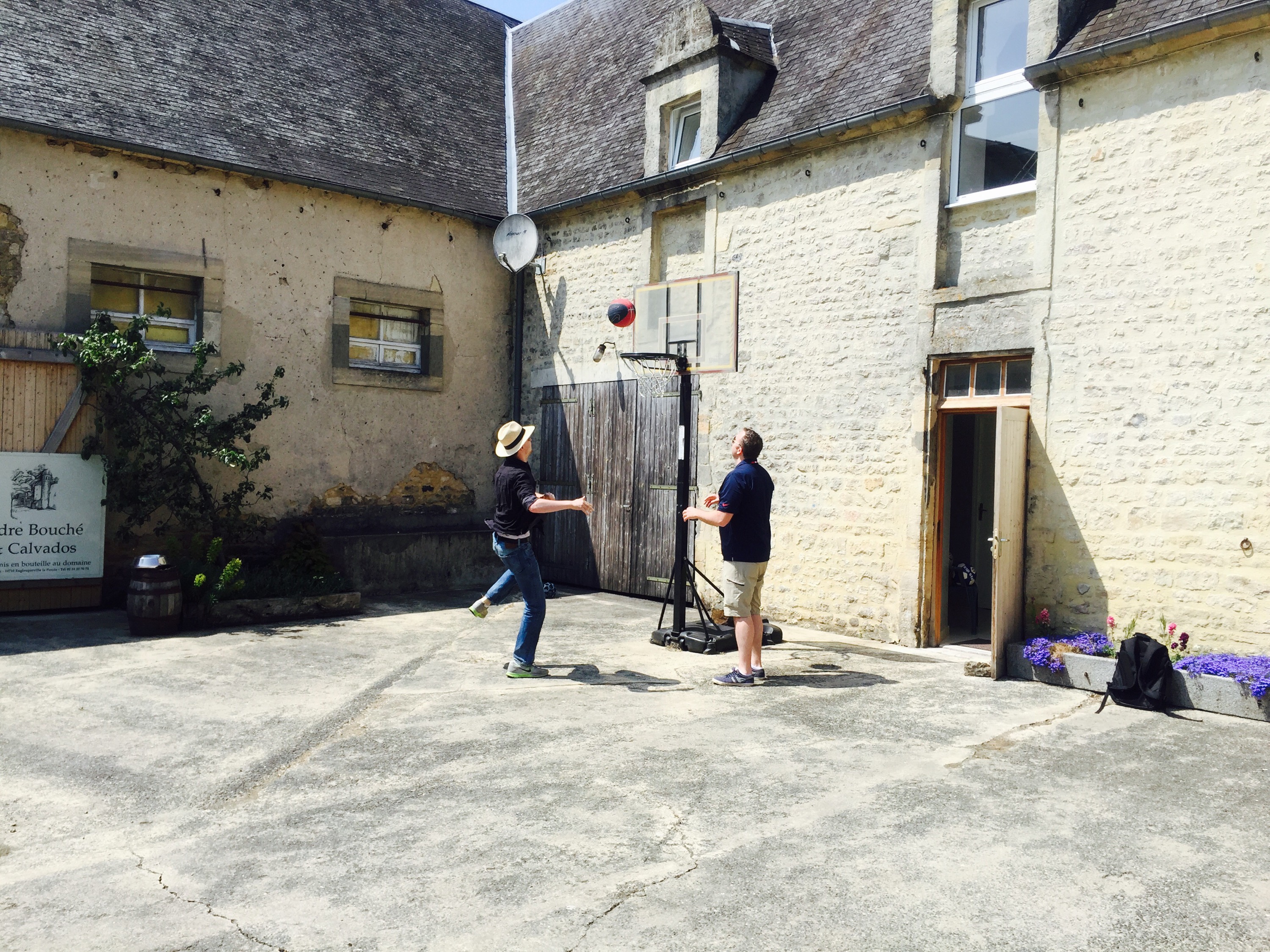
And there’s always time for an impromptu game of basketball while in Normandy…
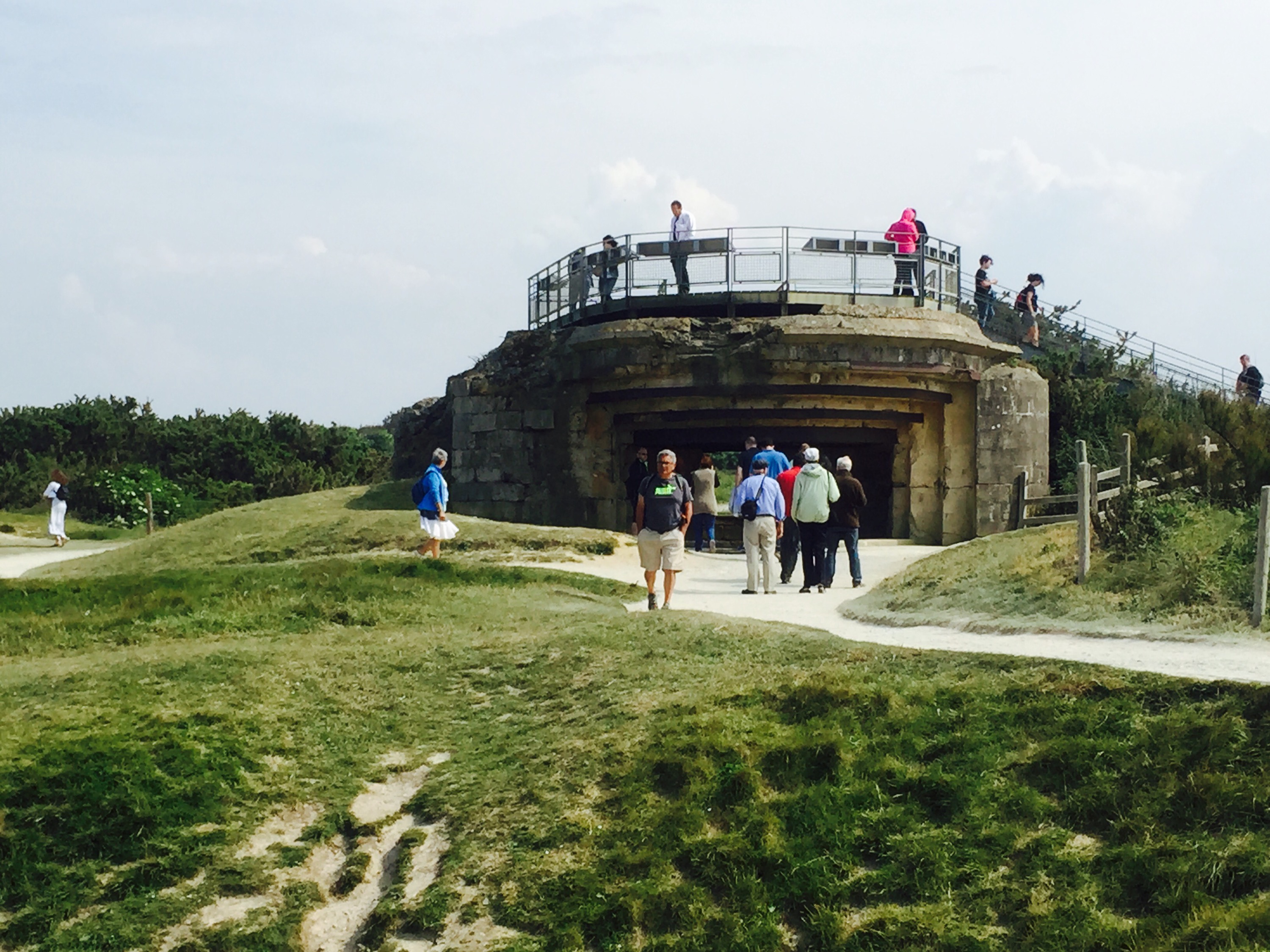
The last stop on our D-Day tour was the famed Pointe Du Hoc, a cliff overlooking the beaches that Army Rangers famously scaled and secured during the invasion. I had never heard of this special mission, but JR and my Dad knew all about it. We started at the small museum to get some background on the endeavor, but most of our time was spent walking through the site. Pointe du Hoc lies 4 miles west of Omaha Beach and was heavily fortified by the Germans. The main issue were the guns housed here – the Germans had 155mm guns that could easily reach Omaha Beach and would threaten the Allied landings on D-Day. The Rangers plan was to land at the bottom of the cliffs before the official D-Day invasion began, scale the cliffs using ropes, ladders, and grapples, and then engage the enemy once they reached the top. Sounds easy (read: crazy!), right?
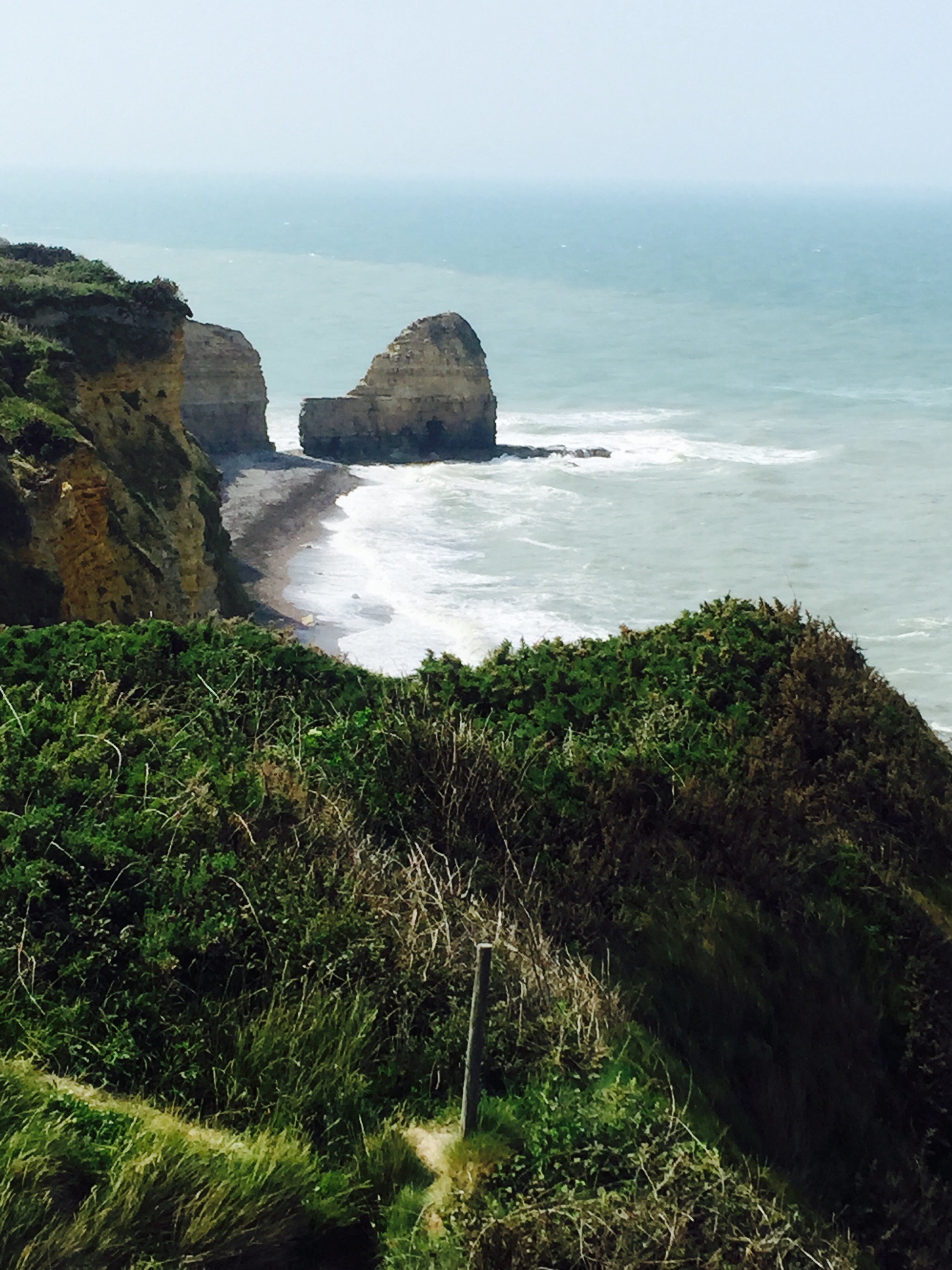

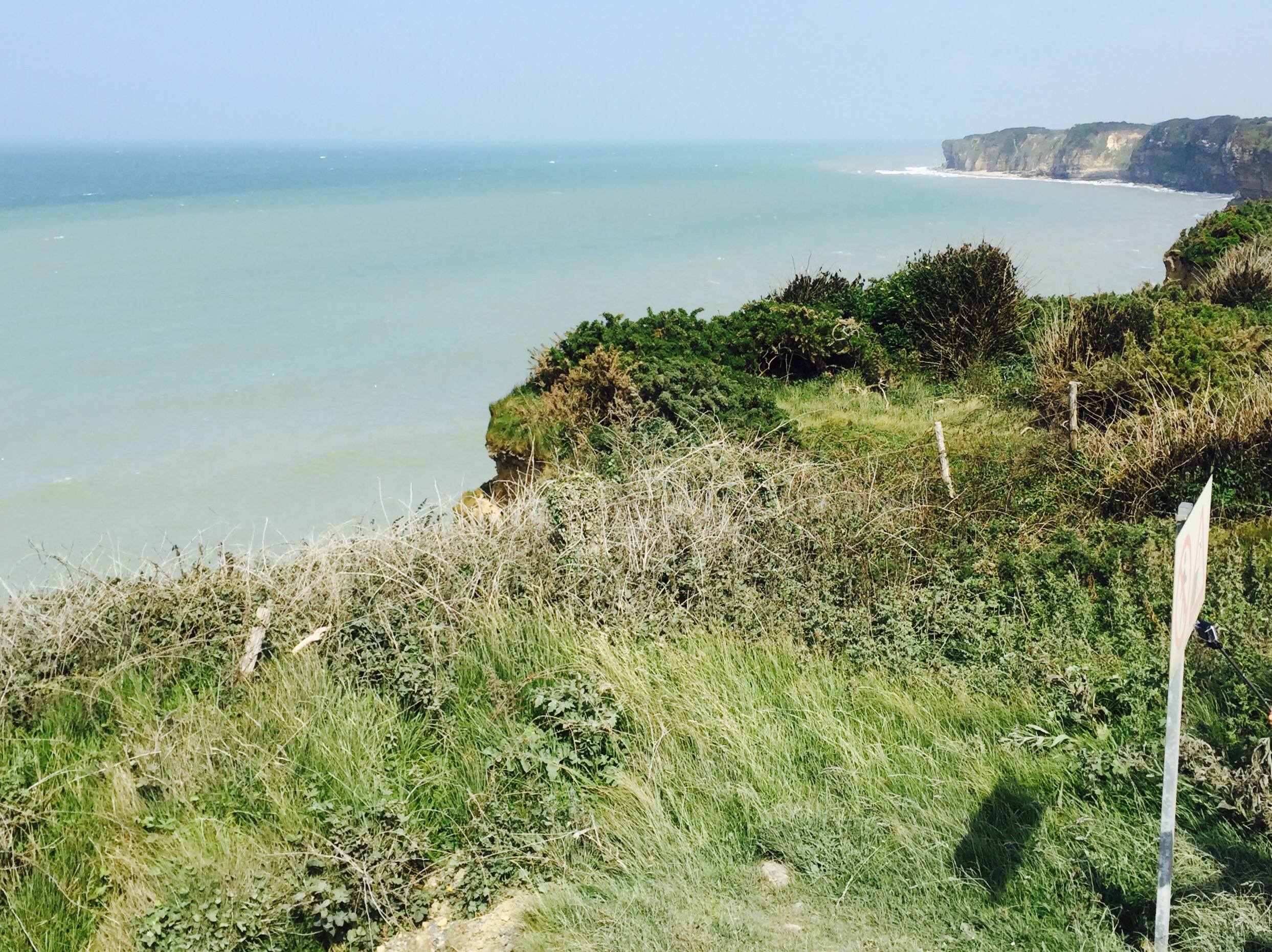
As with most things that happened on June 6, 1944, the plan to secure Pointe Du Hoc didn’t go as planned. Although the Allies heavily bombed the cliff in the months and days before, many of the German bunkers still survived. Several of the landing crafts carrying the Army Rangers sank or were destroyed due to German fire, but finally the Army Rangers landed at the base of the cliff – with only half of the force that started out on the journey. These brave men scaled the cliffs and were able to locate the huge 155mm guns that could reach Omaha Beach (the Germans had actually moved the guns so a search party was sent to find them) and destroyed them. This was a huge win for the Allies. Without securing Pointe du Hoc, there could’ve been a very different outcome on D-Day.

After another full day of sightseeing, we ended our visit in the town of Bayeux and enjoyed dinner near the town center. As usual, Lizzie requested pizza for dinner. There’s surprisingly a lot of pizza on the menus in France – which makes for a happy toddler. 🙂
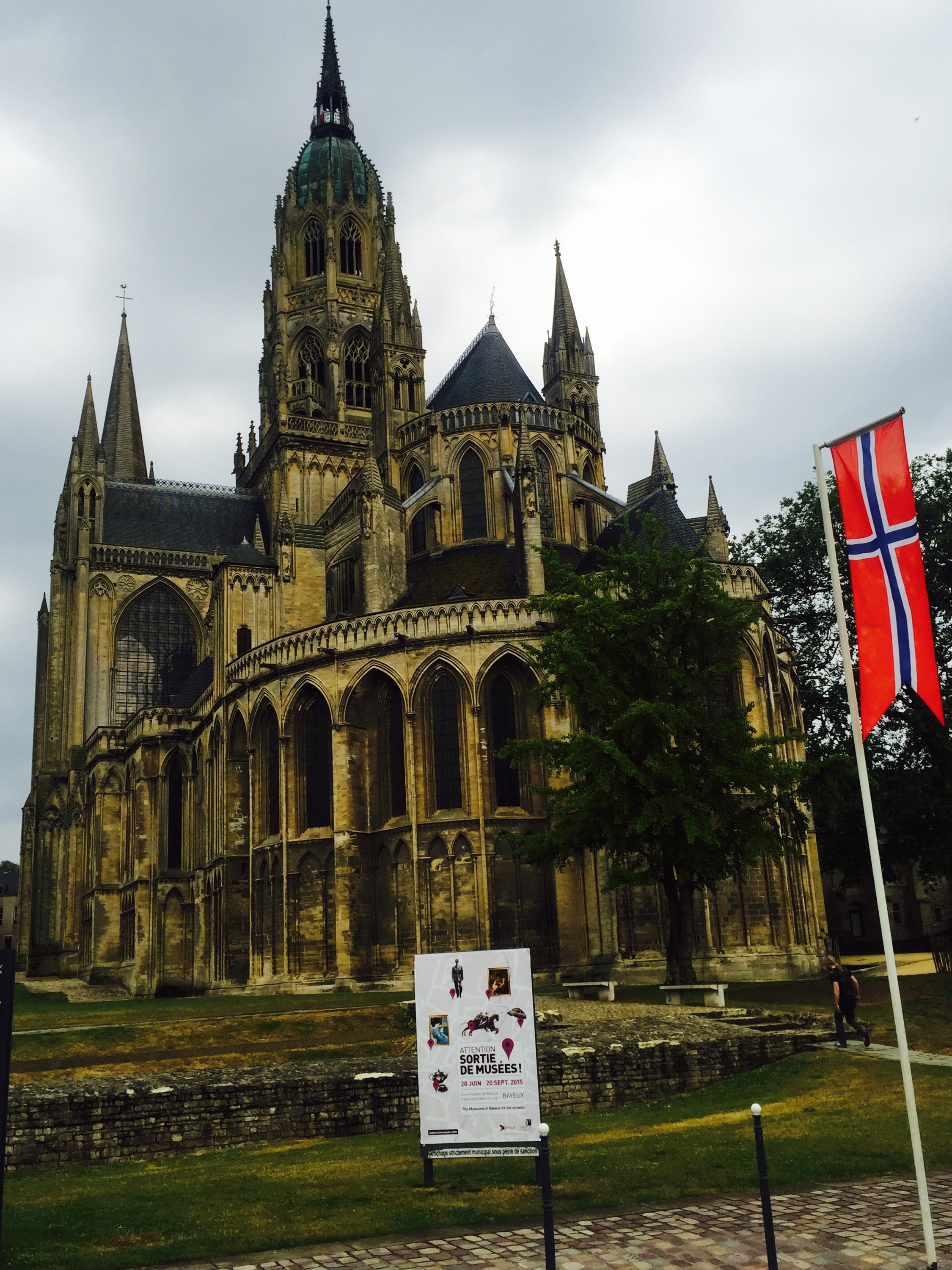
We didn’t really do Bayeux justice – just not enough time in our busy schedule. But I would be remiss if I didn’t mention the famous Bayeux tapestry that’s housed here. The tapestry is around 270 ft long and was embroidered on linen in 1070. It depicts the Norman conquest of England. I didn’t think I would be too impressed by a tapestry, but it’s really a sight to see! They also have a beautiful cathedral here that’s as large as the Notre Dame in Paris. I’ll leave you with a view of this beautiful Norman-Romanesque site built in 1077.

 ginger.in.paradise
Leave a reply to Erin Mary Cancel reply